Learn
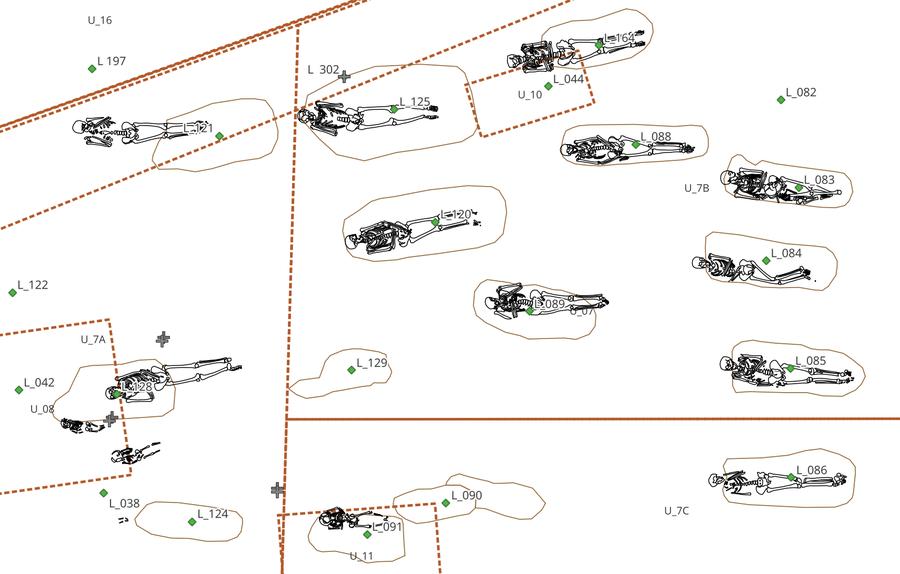
Archaeology is the study of the human past through material remains. Rather than relying only on written records, archaeologists examine objects, structures, and landscapes to understand how people lived, worked, and interacted with their environment. This includes everything from pottery and tools to buildings, burial sites, and entire settlements. Each of these elements contributes to a broader picture of past societies.
Archaeological work begins with careful observation and survey. Before excavation takes place, archaeologists study the landscape, identify areas of interest, and document visible features. In Central Asia, this may include surface scatters of pottery, low mounds marking ancient settlements, or standing elements such as stone grave markers. These initial steps help guide where and how more detailed investigation should occur.
Excavation is one of the most well-known aspects of archaeology, but it is also one of the most methodical. Archaeologists remove soil in controlled layers, carefully recording the position and context of every find. This process is essential because the value of an artifact lies not only in the object itself, but in where it was found and how it relates to other materials. Once a layer is removed, it cannot be replaced, making accurate documentation critical.
After excavation, much of the work continues in the laboratory. Artifacts are cleaned, catalogued, and analyzed using a range of methods. Specialists may study ceramics, human remains, metals, or environmental samples, each contributing different types of information. In regions like Central Asia, where diverse cultures and long-distance connections have shaped the archaeological record, this analysis helps identify patterns of interaction, trade, and cultural change.
Archaeology in Central Asia is shaped by both its geography and its history. The region has long been a meeting point of nomadic and settled populations, as well as a crossroads of major trade routes. This has produced a rich and complex archaeological record, where influences from different cultures can often be seen side by side. Understanding this complexity requires careful attention to context and a willingness to integrate multiple lines of evidence.
Ultimately, archaeology is about more than uncovering objects—it is about reconstructing human stories. By combining fieldwork, laboratory analysis, and interpretation, archaeologists seek to understand how people in the past lived and how their experiences relate to the present. Each discovery, no matter how small, contributes to a deeper and more nuanced understanding of human history.
Explore the topics below to learn more about the key materials, features, and methods archaeologists use to understand past societies in Central Asia.